Dec
Instruction and Education
MIDI vs. Audio Loops: Why MIDI is Superior for Metal Production
MIDI vs. Audio Loops: Why MIDI is Superior for Metal Production
When it comes to adding drum tracks to your metal and hard rock productions, today you’re faced with a fundamental choice: audio loops or MIDI files. While both formats have their place in modern music production, MIDI has consistently become the route for heavy music production.
Understanding the differences between these formats—and why MIDI has come to dominate in today’s metal production—can transform your approach to creating the crushing drum tracks you’re after.
Understanding the Fundamental Difference
Before diving into why MIDI has become ubiquitous in metal production, it’s crucial to understand what separates these two formats.
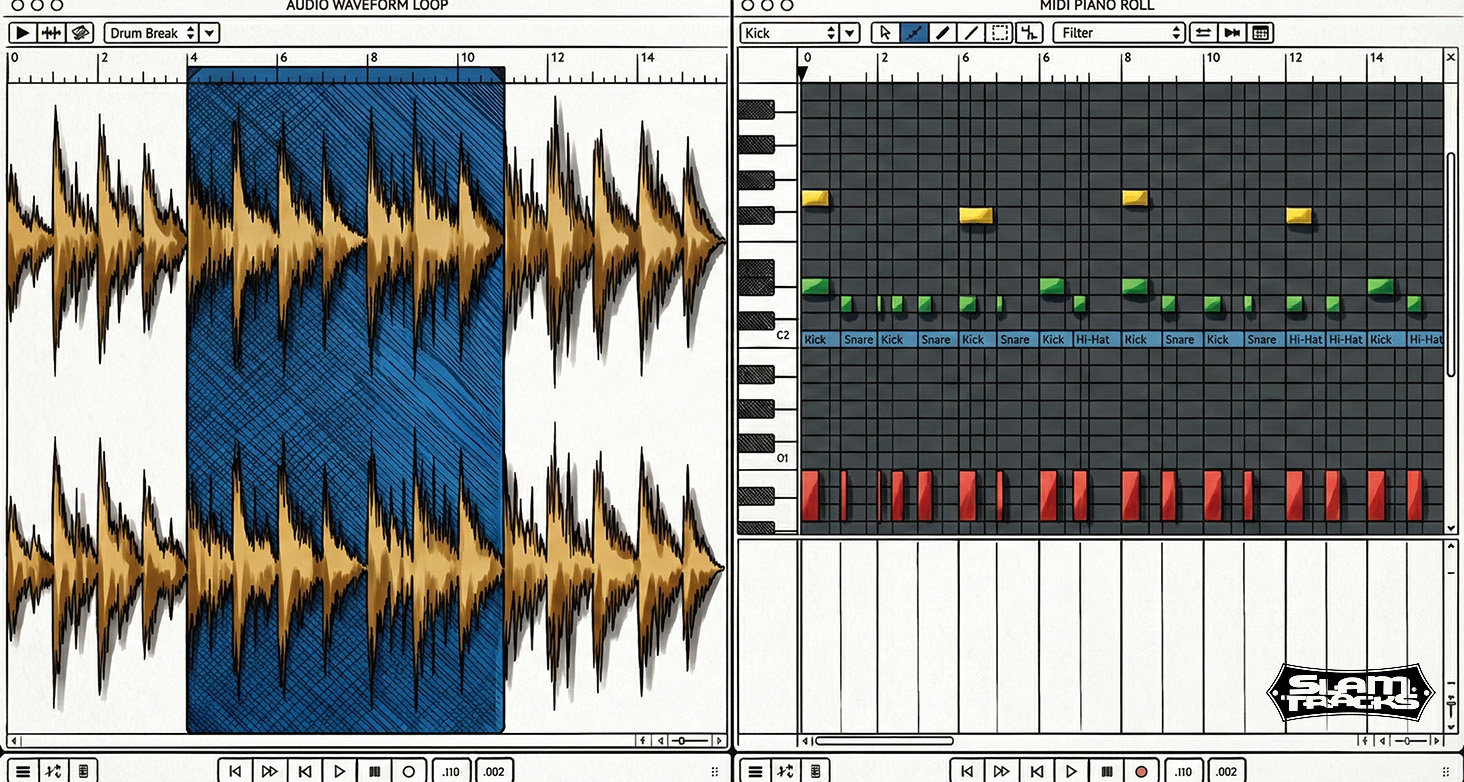
Audio loops are pre-recorded, “baked-in” drum performances captured as stereo or multi-track audio files. Once recorded, these files are essentially static—what you hear is what you get.Now, audio loops do have some flexibility. Most modern DAWs can alter the tempo to some degree, both up and down, without noticeable audio degradation. But, the ability to speed up or slow down are no way close to the infinite ability to manipulate MIDI.
MIDI files, on the other hand, contain only performance data: note information, timing, velocity, and other musical instructions that tell your drum virtual instrument what to play. So, in practice, a drummer could comfortably play a ripping pattern at 100 BPM and then crank it up to whatever tempo is needed for the song. As long as you get the MIDI data recorded, the ability to transform this data is infinite. Not that it’s only musical to do (that’s a whole other question to wrestle with), but you essentially have no limits with MIDI.
Think of MIDI as sheet music for your computer. Just as a drummer can interpret written music with their own style and kit, your virtual instrument interprets MIDI data using whatever drum sounds you’ve loaded. This fundamental difference creates a world of creative possibilities that audio loops simply cannot match.
Tempo Flexibility: The Ultimate Creative Freedom
Metal music spans an enormous range of tempos, from doom-laden crawls at 60 BPM to blast-beat mayhem exceeding 200 BPM. Audio loops lock you into their recorded tempo, creating significant limitations when inspiration strikes at a different speed. And, unless you have a drummer capable of playing cleanly at insane tempos (and, let’s face it, there are dudes out there who are pushing the limits of human capability…El Estepario Siberiano, anyone? Beyond insane speed, but entirely musical as well), you have to settle with what your drummer can handle.
With MIDI, tempo changes are seamless and lossless. That crushing 120 BPM groove can instantly become a 90 BPM groove or a 220 BPM thrash assault without any degradation in quality. Audio loops, when stretched or compressed to match different tempos beyond a reasonable amount, suffer from artifacts, pitch shifting, and timing irregularities that can destroy the natural feel of a performance.
Consider the creative process: you might start writing a song at one tempo, then realize it needs more energy or aggression. With MIDI, this tempo adjustment takes seconds. With audio loops, you’re either stuck with the original tempo or forced to deal with time-stretching artifacts that can make drums sound unnatural and lifeless. Though, there is another option which often gets overlooked in today’s “got to have it now, can’t wait three minutes” world: choose another drum loop! It’s not that hard to navigate to another folder and find an audio loop recorded at (or, at least, near) the target tempo. So, if you can possibly spare an extra minute or two finding another loop file, consider yourself blessed.
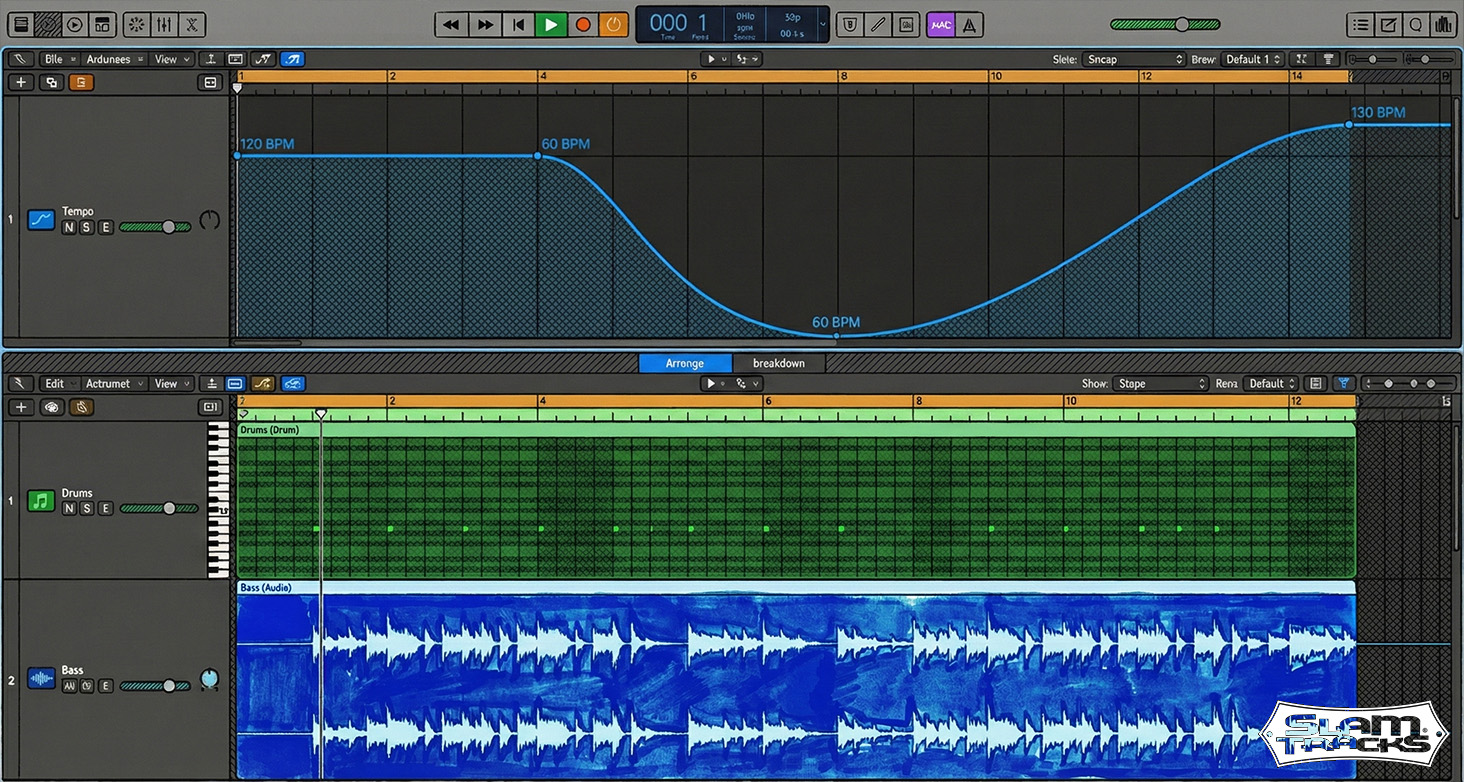
But, MIDI’s flexibility extends beyond simple tempo matching. MIDI allows also for gradual tempo changes, accelerandos, and ritardandos that can create dramatic build-ups or breakdowns—essential elements in modern metal composition. Try creating a convincing ritardando with audio loops, and you’ll quickly appreciate the surgical precision that MIDI offers (though some loop companies do include such final touches; it’s just a standard or expected kind of thing).
Complete Drum Sound Customization
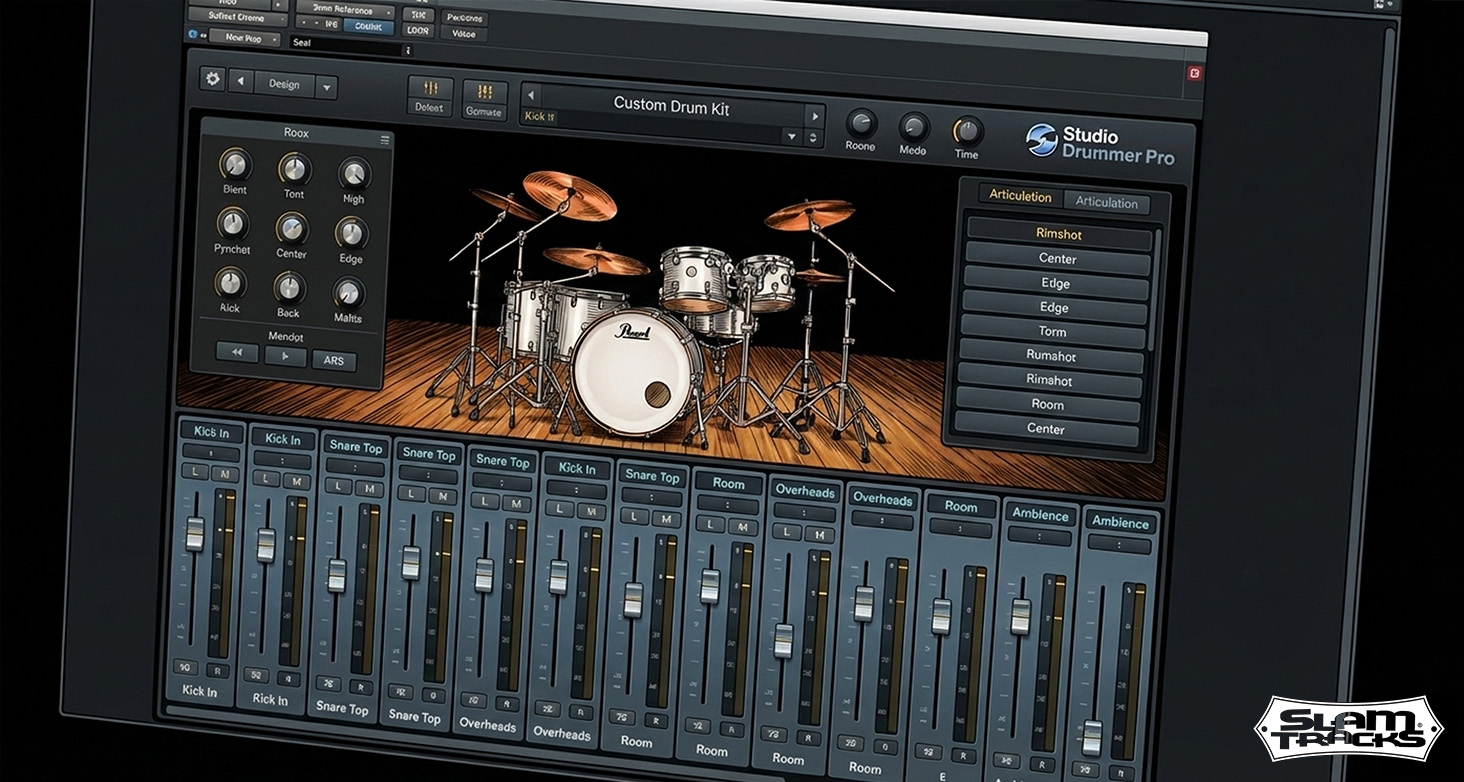
Perhaps the most compelling advantage of MIDI for metal production is the complete control over drum sounds. Audio loops bind you to the sonic decisions made during their recording: the drum kit, microphone placement, room acoustics, and processing choices are permanently embedded in the file. So, if you’re in love with the drum mix of the loops you have, you’re in luck. Thankfully, when buying drum loops online, you certainly can check out the audio previews so you’ll know whether or not the drum mix is for you. But, again, the mix you’re getting is the mix you’re getting. For some, that’s a godsend. No need to fuss around getting the sounds dialed in just the way you want them. You like what you hear, and you get to work.
But, if you’re particularly picky when it comes to your drum mix, MIDI has the leg up here. MIDI files work with any drum virtual instrument or hardware sound module, giving you access to virtually unlimited drum libraries (and, there are more than a few choices out there). Want to swap that rock kit for a massive metal setup with triggered samples? Simple. Need to replace the kick drum with something with a bit more attack that cuts through heavily distorted guitars? Easy. Prefer the snare from one library combined with toms from another? MIDI makes it possible.
This flexibility is crucial in metal production, where drum sounds often make or break a mix (though, the same could be said, for any genre so we’ll try to make off on these universal “truths” which are a bit hyperbolic at times, but we digress..).
When you got to have the kick drum punch through dense guitar walls, snares crack with authority above screaming vocals, or cymbals with the the right attack, sheen, and decay to articulate during fast passages (without becoming washy messes), then MIDI is going to help you get those jobs done.
Modern virtual instruments offer multiple velocity layers, round-robin sampling, and extensive articulation options. A single MIDI note can trigger different samples based on velocity, creating natural dynamics that audio loops simply cannot provide. This becomes especially important in metal, where extreme dynamic contrast from whisper-quiet clean sections to crushing heavy passages defines the genre’s emotional impact.
So, if you’re a complete control freak for your sounds, then MIDI is the way for you to go.
Storage Efficiency and Library Management
This is kind of an obvious advantage, but it still needs a mention in this guide.
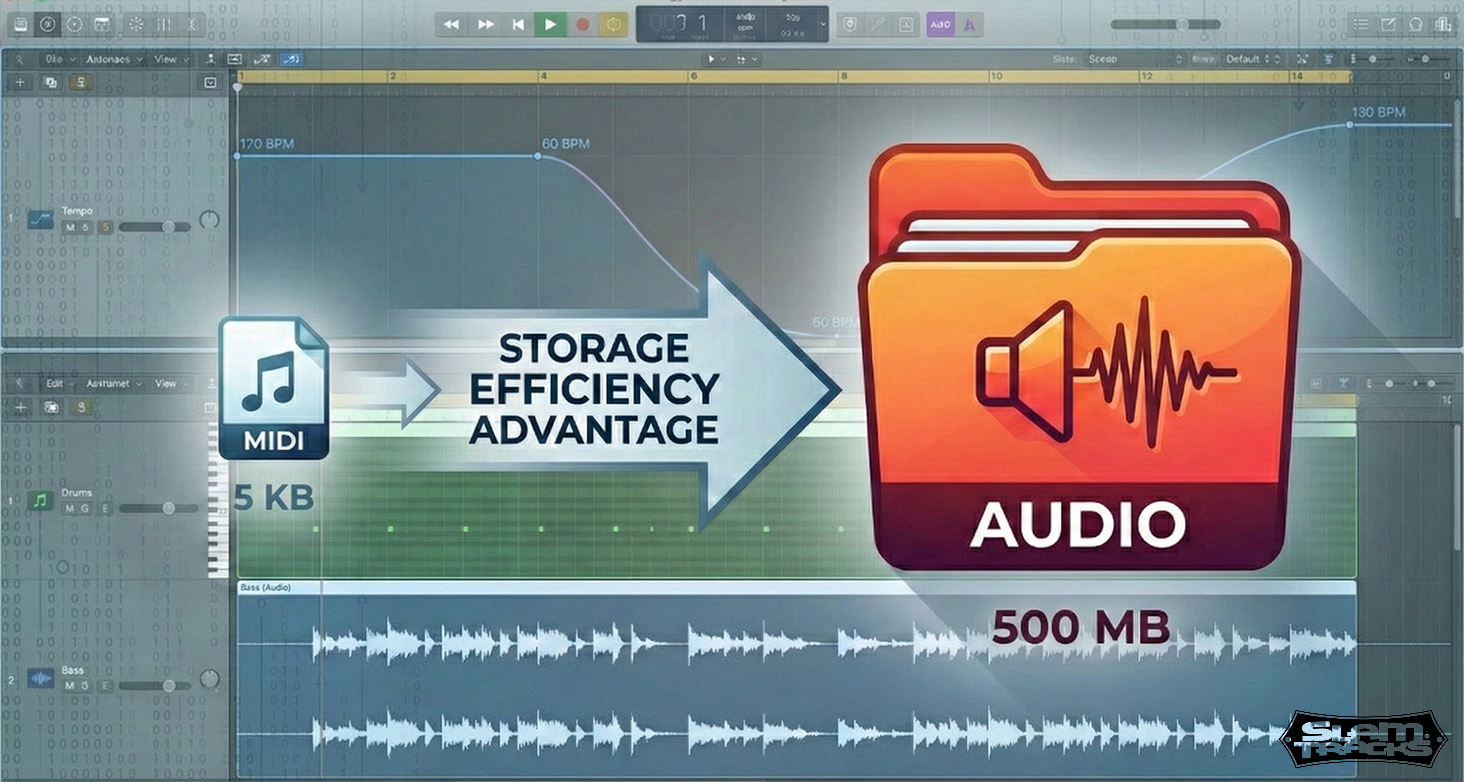
The practical advantages of MIDI extend to file management and storage. MIDI files are incredibly compact, typically measuring in kilobytes rather than megabytes. An entire album’s worth of MIDI drum tracks might occupy less space than a single audio loop. This efficiency of space-saving is always welcome, even in this day of hard drives and cloud storage becoming increasingly more generous as the costs continue to drop. When you’re building multiple groove libraries for different projects and genres, having the storage responsibilities (and all the backups many musicians are likely to overdo) become a non-issue is still kind of nice.
Audio loops consume substantial hard drive space, especially when recorded at quality resolutions like 24-bit/96kHz. A comprehensive audio loop library can quickly consume a few gigabytes, while an equivalent MIDI library fits comfortably as an email attachment.
Other than storage concerns, what other advantages are there to MIDI’s modest file sizes? This efficiency translates to faster project loading times.Hard to doubt smaller files sizes still do load faster.
So, for producers working on multiple projects or those with limited storage capacity, MIDI’s compact nature provides obvious practical benefits over recorded audio.
Velocity and Performance Control
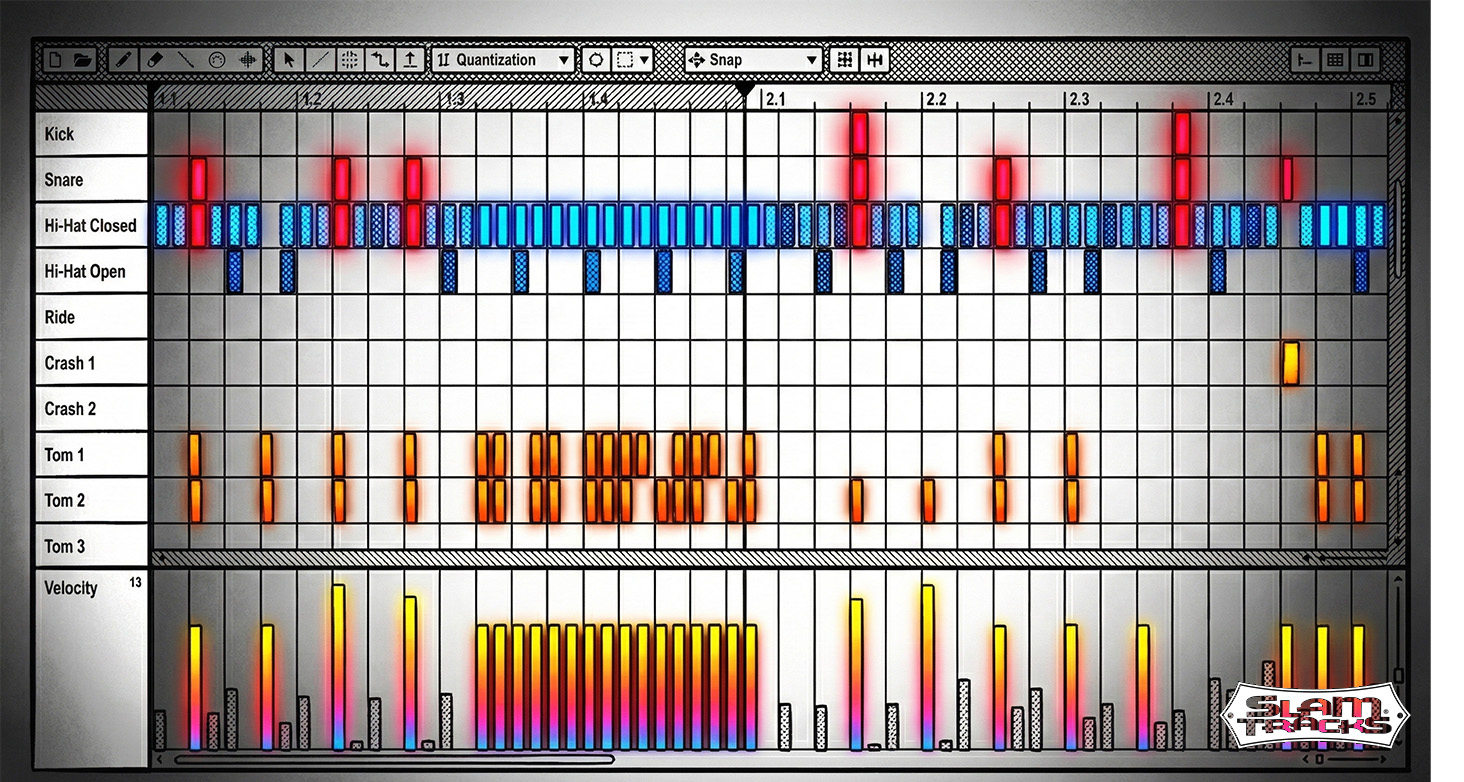
Metal drumming relies heavily on dynamics and accents to create groove and excitement. MIDI’s velocity data captures these subtle performance nuances and, thankfully with today’s massive virtual drum libraries, these nuances can be expressed. Every hit contains velocity information that controls not just volume, but also which sample layers trigger in your virtual instrument. This control allows for realistic ghost notes, subtle hi-hat variations, and the aggressive accents that define metal grooves. You can edit individual hits to create the perfect balance between consistency and human feel, something impossible with pre-recorded audio loops.
Producers can also use MIDI controllers to add real-time expression, playing parts back through virtual instruments with human timing variations. This hybrid approach combines MIDI’s flexibility with live performance nuances, creating drum tracks that sound both professional and authentically human.
Again, MIDI is always going to win out when it comes to control. Audio loops don’t allow that level of fine-tuning and complete control, but that’s not always a bad thing. Maybe too much control can be paralyzing to some degree? When offered unlimited choices, doesn’t it always seem to cloud the picture and slow these down? Sounds like we are onto a topic suited for another Slam Tracks blog post, but let’s leave it: All of MIDI’s obvious advantages, with few exceptions, could quickly and easily become disadvantages if the format is misused.
Addressing MIDI Quality Misconceptions
Despite MIDI’s clear advantages, several persistent misconceptions continue to persist, however.
The most common is the belief that MIDI inherently sounds “fake” or “robotic” compared to audio loops. This misconception stems from early MIDI implementations and low-quality virtual instruments from decades past. Just think of early 80s keyboard when fed a MIDI file if you need a mental/aural reference. It sounded cheesy then. It sounds cheesy now. But, MIDI has come a long way since.
Modern drum virtual instruments like Superior Drummer, BFD, and Steven Slate Drums feature multi-gigabyte sample libraries recorded in world-class studios with all the bells and whistles. Today’s virtual instruments offer sample quality that rivals most audio loop libraries. The “MIDI sound” people remember from the 1980s and 1990s are a far cry from today’s sophisticated virtual instruments.
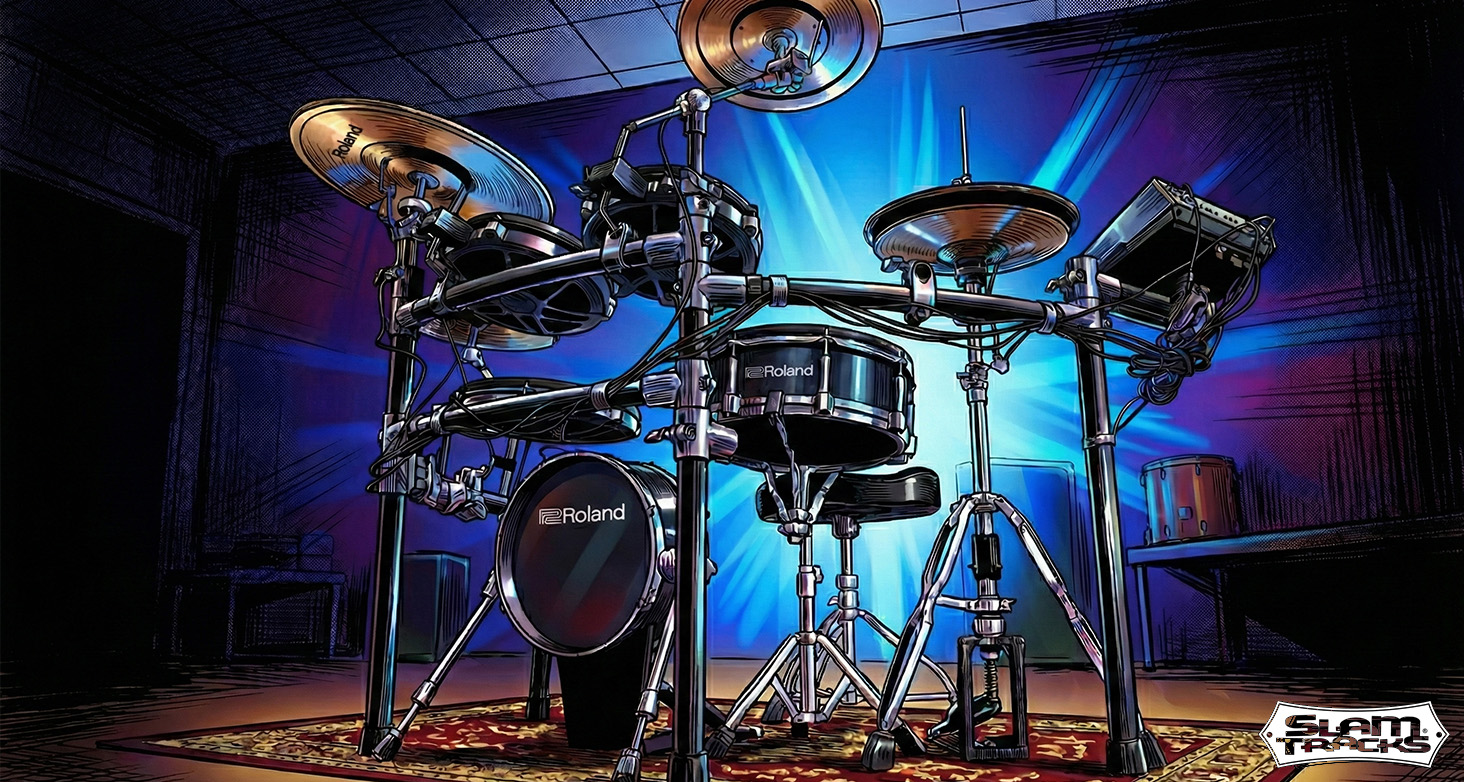
Another misconception suggests that MIDI lacks the “human feel” of audio loops. In reality, well-programmed MIDI, like the live, non-quantized grooves in Slam Tracks libraries (hey, you know a plug for our stuff was coming eventually, didn’t you?), retains all the subtle timing variations and musical phrasing of human drummers. The difference lies not in the format but in the quality of the original performance and programming. Just like today’s virtual drum instruments have come a long, so have the e-drum kits used to capture the MIDI. Today’s offerings from Roland and Yamaha are insanely good and quite possibly becoming entirely capable of replicating the live, acoustic drum experience (though, ask any experienced drummer and they’ll likely call “bullshit” on that claim).
One last misconception involves technical complexity. Some folks worry about MIDI’s technical complexity compared to audio loops’ “drag and drop” simplicity. While MIDI does require basic understanding of virtual instruments and routing, modern DAWs have streamlined these processes significantly. The initial learning investment pays dividends in creative flexibility and professional results.In other words, MIDI ain’t that hard once you work with it a bit (just like any other skill you might need to master).
Real-World Metal Production Scenarios
To this point, we discussed the MIDI vs Audio debate in largely theoretical and quasi-philosophical terms. But, about the world world? The situations that actually face most recording artists?
Consider some of the common metal production challenges and you’ll realize MIDI’s advantages become very apparent:
- Scenario 1: Your song needs a breakdown section with half-time feel, but your audio loops don’t include the right variation. With MIDI, you simply duplicate the main groove and edit it to create the perfect breakdown pattern.
- Scenario 2: The producer wants to try a different kick drum sound that better complements the bass guitar. Audio loops require complete replacement or complex processing. MIDI allows instant drum sound swapping while preserving the performance.
- Scenario 3: The song’s bridge needs a subtle dynamic build using increasingly aggressive playing. MIDI velocity editing creates this progression naturally. Audio loops would require multiple versions or artificial volume automation.
- Scenario 4: During mixing, you discover the snare needs different attack characteristics for certain sections. MIDI allows selective sound replacement or layering. Audio loops offer no such flexibility without compromising the original performance.
The New Standard
Pro metal producers and recording artists consistently choose MIDI for drum production today because flexibility and control generally (sadly?) trumps nearly everything else involved in the recording process.
The ability to adapt, modify, and perfect drum tracks throughout the production process is far easier than working with a live drummer take after take to get the performance down the way it should be.Who wants to deal with sweating it out when you can just just click a few buttons?
And today’s major metal albums regularly feature MIDI-triggered drum samples (sometimes blended with live drums, but even that’s becoming more of a rarity) because why not? What the world needs is another metal album that sounds like Superior Drummer 3, with drum tracks worked out on a laptop at home, and not another And Justice for All, Peace Sells… but Who’s Buying? or Reign in Blood with their distinctive drum tones and beautifully imperfect performances? Who wants that?
Well, apparently, not many folks today want that. So, MIDI has been fully accepted and embraced at the highest levels of music production.
When time, budget, and creative demands require maximum flexibility and control, MIDI delivers the results today’s artists want and the music fans are willing to accept.
Making the Right Choice for Your Production
While this article strongly advocates for MIDI’s advantages in metal production, the choice ultimately depends on you.
What are your specific needs, technical comfort level, and creative goals?
How do you feel about technology’s growing presence and role in musical creation?
Are you OK with harnessing today’s virtual instruments to replace human musicians?
Obviously, those are questions for you to wrestle with and far beyond the intended word count of this article. But, for metal producers serious about achieving pro-level results, MIDI is likely your answer. The format’s advantages in tempo flexibility, sound customization, storage efficiency, and performance control make it indispensable for modern heavy music production.
While audio loops certainly have their place in jump-starting ideas and recording more inspired demos, they might not be the one right tool all the time. For musical productions where every element must serve the music’s aggressive energy and emotional impact, MIDI’s capabilities have enabled it to become the professional standard.
The choice between MIDI and audio loops ultimately reflects your commitment to creative control. These are just tools that contribute to the music’s power and intensity
And, like any tool, the one handling the tool is far, far more important.